The technology is real. The proof is still owed.
Both technologies are commercially proven around the world. Capsule-style modular homes are made in volume, and gantry 3D concrete printers have produced homes in Europe, the US and the UK. Superb Modular and Buildatronix 3D now need to show their units, robots and numbers perform as claimed.
Modular pods & cabins
The specification (galvanised frame, 2 mm aluminium shell, 80–100 mm PU, 6+16A+6 glazing) matches established capsule-home practice. The open questions are about compliance and warranty, not whether the product works.
Walls in 48–72 hours
This is consistent with industry benchmarks of 1–4 days for ~100 m² of single-storey walls. Buildatronix-specific print data, material test results and a demo are still needed.
Investment returns
"100% profit in 9 months" (~12.1%/month) can't be met even at full utilisation of a £250,000 BT500 at £2,500/day. superbmodular.com also advertises a "guaranteed 50% annual return" from £1,000. See §7.
Recommendation
- Proceed with a 16-week, gated proof-of-concept (§5) covering document verification, independent testing of a sample modular unit, a witnessed demo print, and demand validation through signed letters of intent.
- Keep the product business and fundraising separate. Do not distribute the Robot Profit Club investment material. If capital is needed, raise it through FCA-authorised routes (§7).
- Lead with evidence in all marketing. State print times as "wall structure only", label renders as illustrative, and quote only third-party benchmarks with sources. The accompanying website and deck follow these rules.
Two mature technologies, two different risks.
2.1 Factory-built modular (Superb Modular)
The range covers capsule pods (SM-05, SM-07, SM-MOD10), Apple Cabins (SM-08, SM-02 Expand), A-frame and AH-frame homes, a round villa (SM-B02), glamping tents and domes, garden rooms, light-gauge steel structures and expandable container units. The capsule range shares this core build-up, taken from the brochure's technical sheet:
| Element | Specification (brochure) | Assessment |
|---|---|---|
| Main frame | Hot-dip galvanised square tube, 2–3 mm | Standard for transportable units. Needs mill certificates and a structural calc for lifting and transport loads. |
| Shell | Aluminium alloy single plate, 2 mm, fluorocarbon (PVDF) baked finish | Durable and low-maintenance. Confirm the coating warranty and the marine-environment rating for coastal sites. |
| Insulation | Polyurethane foam, 80–100 mm | Good thermal performance (roughly 0.22–0.28 W/m²K is achievable). PU is combustible, so the fire strategy and reaction-to-fire class must be confirmed (§4). |
| Glazing | 6+16A+6 hollow tempered, European grey | Double-glazed unit. A U-value around 2.7 W/m²K is typical for air-filled units; argon fill and low-E coating are needed to approach UK targets. |
| Services | Bathroom, A/C, water heater; smart lock; light strips | Imported units must use UK-compliant fittings (BS 1363 sockets, BS 7671 installation and certificate). Verify on the sample unit. |
| Structure guarantee | 50 years (Apple Cabins) | Needs the named guarantor, policy wording and any insurance backing. |
Technology readiness: TRL 9. Capsule and expandable units are in mass production globally. The main risks are in the supply chain (factory quality, shipping damage) and in regulation (building regulations, fire, planning). The engineering is not the issue.
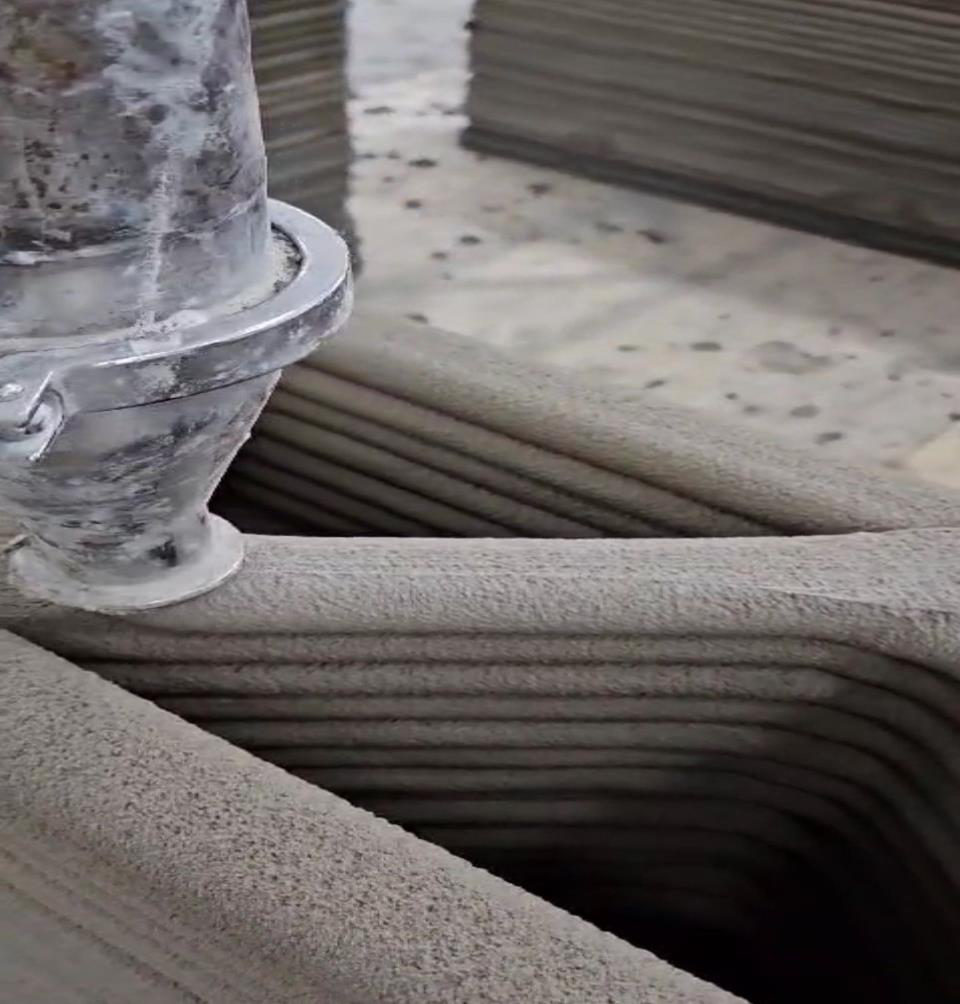
2.2 Robotic 3D construction printing (Buildatronix 3D)
The footage and renders show a rail-mounted gantry printer, the same type as market leaders such as COBOD's BOD2. A print head extrudes cementitious mortar along a toolpath generated from CAD. The industry evidence:
- Speed: COBOD states a ~100 m² single-storey home's walls typically take 1–4 days to print. In its Heidelberg project, one square metre of wall took about five minutes.
- Cost: ICON has reported its printed-wall cost falling from ~$160 to ~$34 per sq ft since 2022. PERI's assessment is ~30% faster and ~10% cheaper than conventional construction. Both are vendor-reported.
- UK precedent: Building for Humanity's 46-home scheme in Accrington, Lancashire, is the UK's first residential 3DCP project. Printing partners have worked on UK compliance through a college R&D facility.
- Equipment cost: COBOD quotes printers from ~$400,000. Earlier list prices ranged from €180k to €950k by size. PERI distributes BOD2 for sale or rental in DACH, but no public day rates were found.
2.3 The Buildatronix BT500
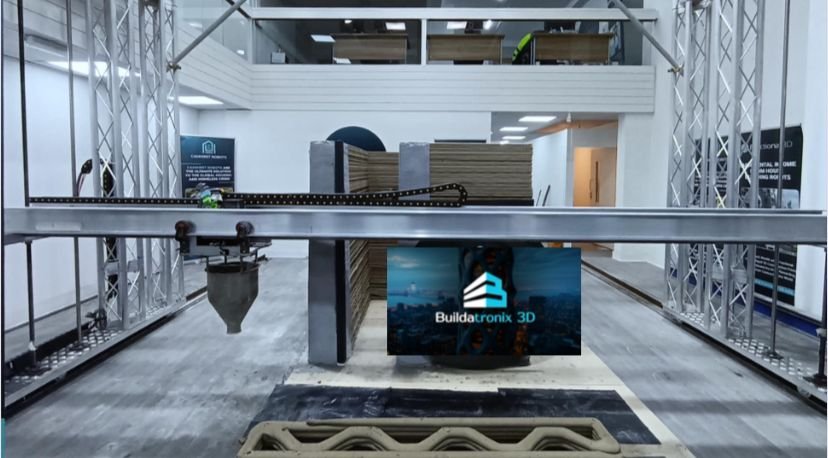
buildatronix3d.com publishes two specification sets for the same machine, and they don't agree:
| Parameter | Home page | 3DCP Robots page | Assessment |
|---|---|---|---|
| Print speed | Up to 1 m/s | 100–300 mm/s | 100–300 mm/s is in line with gantry printers. 1 m/s is unusually high for structural mortar. Use the lower figure. |
| Layer height | 1–5 cm | 10–30 mm | Overlapping ranges. Publish one figure tied to each nozzle size. |
| Build envelope | "Structures up to 500 m³" | Not stated | Volume isn't a standard printer spec. Publish the X × Y × Z gantry dimensions. |
| Nozzle | Not stated | Round, 10 / 20 / 30 / 40 mm | Plausible. A 30–40 mm nozzle suits walls; 10 mm suits detail work. |
| Weight & shipping | Not stated | Under 1.5 t, fits a 20 ft container | Plausible for a modular truss gantry, and a real logistics advantage. |
| Materials | "Batpolymer" cement (likely a typo for geopolymer), basalt-infused concrete, recycled plastics, earth-based composites | "Widely available, affordable cement" (About page) | Recycled plastic isn't a structural wall material for this kind of machine. Each mix needs its own test data. |
| Speed vs. conventional | "20–30× faster" | — | Overstated. Against 2–4 weeks of masonry, 48–72 h is ~5–10× for the wall structure, and less for the whole build. |
| Price | — | £250,000 launch package: robot, mixer pump, laptop & software, tool kit, training for one person (+£5,000 each extra) | Competitive against COBOD's quoted entry price of ~$400k. This is the first hard commercial figure. |
The home page also cites three case studies: 50 affordable homes in three months with 40% savings, 100 disaster shelters in two weeks in Southeast Asia, and a Dubai office built 60% faster. None names a client, location, date or partner. The site's media uploads are dated August 2025, so these may be illustrative scenarios rather than delivered projects. They should be evidenced or removed.
Technology readiness: TRL 8–9 for the industry; TRL ~6–7 for the BT500 (a working prototype shown in a relevant environment, the showroom). No independent print data, mortar test results or completed client projects are available yet. The demo print in §5 is designed to establish them.
What "walls in 48–72 hours" does and doesn't mean. It covers machine print time for the wall structure of a small house. It excludes the slab and foundations, curing, lintels, roof, windows, mechanical and electrical services, finishes, inspections and planning. A realistic UK programme for a printed bungalow is weeks to a few months on site, still materially faster than masonry, after approvals.
Every claim, graded.
Each material claim from the supplied brochure, deck and videos is graded against public evidence. Supported means independently evidenced. Plausible means consistent with industry data but company proof is still needed. Unverified means no evidence was found either way. Not credible means it conflicts with evidence or arithmetic.
| Claim | Source | Grade | Evidence needed / note |
|---|---|---|---|
| 1.6 billion people lack adequate housing | RPC deck | Supported | Widely cited UN-Habitat estimate. |
| Walls of a small house in 48–72 hours | RPC deck, video | Plausible | Matches COBOD's 1–4 days for ~100 m². Needs a witnessed timed print (§5, Gate C). |
| "24 to 72 hours" small house | Video 1 | Plausible | 24 h is aggressive and true only for very small footprints. Use "48–72 h" consistently. |
| Modern villa "in less than two weeks" | Video 1 | Unverified | Unlikely end-to-end in the UK once roof, services and inspections are included. Remove it, or qualify it as shell only. |
| Live in / rent out within hours of delivery | Brochure | Plausible | True for plug-in units after base, utility connections and planning are in place. |
| Pod build-up (frame, shell, PU, glazing) | Brochure | Plausible | Request material certificates, the glazing U-value and the fire classification of the insulation and cladding. |
| 50-year structural guarantee | Brochure | Unverified | Name the guarantor, provide the policy wording and confirm any insurance backing. |
| Garden rooms "exceed industry standards" | Brochure | Unverified | Need signed structural calculations per design from a chartered engineer. |
| Robot rents for $2,500–$5,000 / day | RPC deck, brochure | Unverified | No public 3DCP rental rate benchmark found. Need signed rental contracts or quotes. |
| 100+ companies on robot waiting list | RPC deck | Unverified | Need named, signed letters of intent with deposits. |
| Affordable proprietary 3DCP cement / ink | RPC deck | Unverified | Need mix design, cost per m³, and 7- and 28-day compressive and flexural test data. |
| Mass production, new factory & HQ in Dubai | RPC roadmap | Unverified | Need lease or ownership documents and production capacity evidence. |
| Premium modular homes return 30–50% p.a. | Brochure p.45 | Unverified | Achievable only on strong sites with high occupancy and low set-up cost. It can't be promised as an "average". See the calculator in §6.2. |
| Robots return 50–100% p.a.; "100% profit in 9 months" | Brochure p.45, RPC deck | Not credible | Arithmetic and structure examined in §6.1 and §7. |
| NASDAQ IPO by May 2028 | RPC roadmap | Not credible | The program's first official launch is listed as Jan 2027. A US IPO 16 months later, with no audited revenue history, is not realistic. |
| BT500 "20–30× faster" than traditional methods | buildatronix3d.com | Overstated | ~5–10× for walls only on the company's own 48–72 h figure. See §2.3. |
| BT500 case studies (50 homes, 100 shelters, Dubai office) | buildatronix3d.com | Unverified | No client, place or date given. Ask for contracts and site evidence. |
| BT500 print speed "up to 1 m/s" | buildatronix3d.com home | Inconsistent | The robot's own product page says 100–300 mm/s. |
| BT500 fits a 20 ft container, under 1.5 t | buildatronix3d.com | Plausible | Verify at the showroom: pack-down time and crate list. |
| BT500 launch package £250,000 | buildatronix3d.com | Published | A firm list price. It also exposes the RPC deck's "$200,000 per robot" figure as inconsistent. |
| Capsule "Richter scale 10 earthquake resistance" | superbmodular.com | Not credible | No magnitude-10 earthquake has ever been recorded, and building resistance is rated by design codes, not the Richter scale. Remove it. |
| Capsule "50+ year life expectancy", "rustproof", "extreme temperature resistance" | superbmodular.com | Unverified | Need corrosion class, coating warranty and design temperature range. |
| Steel buildings resist "tornadoes, hurricanes and earthquakes" | superbmodular.com | Plausible | Possible with site-specific wind and seismic design. Provide engineer calculations per project. |
| Space pods delivered in 90 days; A-frames assembled in ~2 days | superbmodular.com | Plausible | Typical for imported capsule units. Confirm in the PoC sample order. |
| Group has 20+ years of house-development experience | superbmodular.com | Unverified | Name the group entities and track record. |
| Office pods: ECO POD £7,549, Cyber POD £5,495 | superbmodular.com | Published | Firm prices. Clarify VAT, delivery and installation. |
| Co-ownership: "guaranteed 50% annual return" from £1,000 | superbmodular.com | Not credible | A guaranteed return on a retail investment. See §7. |
3.1 Website consistency audit
Buyers and investors will check the live websites before they check any brochure. These issues undermine credibility and should be fixed before any launch campaign:
- Contact details: the Superb Modular contact page lists a placeholder hosting email address instead of info@superbmodular.com. The Buildatronix contact page still contains template filler text.
- Spec conflicts: BT500 speed and layer height differ between pages (§2.3). The A-4 house spec block is labelled "A-3 House" and lists "2 Berooms" against a three-bed heading. The A-3 block appears twice.
- Empty or thin pages: the Superb Modular Videos page and the Buildatronix Modular Homes and Investors pages carry almost no content. The Buildatronix home page renders little text without scripts, which hurts SEO.
- Image provenance: some Superb Modular gallery photos carry a third-party "ESPACE" watermark, which suggests an outside (OEM) manufacturer. Confirm the factory and image rights, and say so honestly ("manufactured by our partner factory").
- Investment content on product sites: the Co-ownership page (superbmodular.com) and the Investors page (buildatronix3d.com) make financial promotions from the same domains that sell homes and robots (§7).
Permission to build, and to be lived in.
The head office is in Manchester, so England's regime is the baseline. The route depends heavily on use.
| Area | What applies | Action in the PoC |
|---|---|---|
| Planning: pods & cabins | Transportable units can sometimes fall under the statutory "caravan" definition (Caravan Sites and Control of Development Act 1960, Caravan Sites Act 1968), which has size and construction tests. Otherwise full planning applies. Holiday sites need a site licence and planning consent. | Get a planning consultant's opinion on each model (SM-05, SM-07, SM-08, SM-02) against the caravan tests. |
| Planning: garden rooms | Often permitted development (outbuildings), with height and boundary limits and no sleeping accommodation. | Publish a PD checklist with each garden-room quote. |
| Planning: 3DCP homes | Full planning permission, like any new dwelling. Innovative-design routes exist (e.g. the Paragraph 84 countryside exception used by a proposed UK 3D-printed home). | Choose a pilot site with an existing consent or a favourable local authority. |
| Building Regulations | Part A (structure), B (fire), C (moisture), E (sound), F (ventilation), L (energy), M (access), P (electrical). Permanent dwellings must comply. Structures that are genuinely caravans may be exempt. | Test the sample unit against Part L limiting fabric values and the Part B fire strategy. Get a Building Control view on the 3DCP wall system. |
| Fire (Part B) | The PU foam core and aluminium-faced panels need a reaction-to-fire classification. Boundary distances matter on clustered sites. | Get classification reports from the manufacturer and do a fire-engineer review of site layouts. |
| Warranty & mortgageability | Lenders usually require a structural warranty (e.g. NHBC, LABC Warranty, Premier Guarantee) and, for modern methods of construction, assurance such as BOPAS. | Approach two warranty providers early. This is the biggest gate for selling 3DCP homes. |
| Product conformity | UKCA/CE marking for construction products such as glazing, and for electrical equipment. Wiring to BS 7671. | Request the certificate pack and have a UK electrician inspect and certify the sample unit. |
| Site safety | CDM 2015 duties on every construction project, including printing. | Use a CDM-compliant method statement for the demo print. |
| Financial promotion | Promoting investments in the UK is regulated (FSMA s21). Pooled interests in an asset managed by the promoter can be a collective investment scheme. | See §7. Take specialist legal advice before any capital raise. |
16 weeks. Four gates. Pass/fail.
Each phase ends with a gate decided by evidence, not by opinion. Failing a gate stops spending on the next phase until it's fixed.
Phase A — Verify (weeks 1–3)
- Collect the document pack: company registrations (UK and UAE), factory identity and audit, ISO 9001 if held, material certificates, glazing and electrical conformity, fire classifications, warranty policy wording.
- Get three customer references with delivered units, plus site visits or video calls.
- Buildatronix 3D: reconcile the BT500 specification (§2.3), provide proof of manufacture and supply, mortar mix design and test data, and evidence for the three published case studies.
- Showroom visit: witness the BT500 running at the Greater Manchester head office. Time a pack-down into a 20 ft container and core the printed sample wall for lab testing.
- Buyer protection: the published ordering terms require a 75% advance payment at booking. For the PoC sample unit, negotiate staged payments, escrow, or a bank guarantee or letter of credit against that deposit.
Gate A: every claim in §3 is either evidenced or withdrawn from marketing.
Phase B — Test the unit (weeks 4–8)
| Test | Method | Pass criterion |
|---|---|---|
| Fabric thermal performance | U-value calculation from the build-up, plus thermographic survey | Walls ≤ 0.26, roof ≤ 0.16, floor ≤ 0.18, windows ≤ 1.6 W/m²K (Part L 2021 limiting values, England) |
| Airtightness | Blower-door test at 50 Pa | ≤ 5 m³/(h·m²); target ≤ 3 |
| Fire | Review of reaction-to-fire classification reports for core and cladding | Classification documented; fire-engineer sign-off for the intended use |
| Electrical | Inspection and test by a UK-registered electrician | BS 7671 Electrical Installation Certificate issued with no C1/C2 defects |
| Water ingress | Hose test on joints, doors and skylights | No ingress after 30 minutes |
| Transport & lifting | Inspection after delivery | No structural damage; doors and glazing operate |
| Expand mechanism (SM-02) | 20 open/close cycles | No binding; seals intact |
Gate B: the sample unit meets the criteria, or a costed remediation is agreed with the manufacturer.
Phase C — Witnessed demo print (weeks 6–12)
| KPI | Measurement | Target |
|---|---|---|
| Print time | Timed machine run for a 40–60 m² single-storey wall set, cavity wall at 2.4 m height | ≤ 72 h print time; set-up and teardown logged separately |
| Compressive strength | Cubes and cores at 7 and 28 days, UKAS-accredited lab | ≥ the design strength specified by the structural engineer |
| Interlayer bond | Core samples across layer interfaces | No cold joints; bond strength within the engineer's tolerance |
| Dimensional accuracy | Laser scan against the CAD model | ±10 mm on wall position; ±5 mm per 1 m on verticality |
| Material use & waste | Mortar weighed in and out | Waste < 5%; cost per m² of wall recorded |
| Crew | Labour log | ≤ 3 operators during the print |
Gate C: all KPIs are met and witnessed by an independent engineer, and the footage is published.
Phase D — Prove demand (weeks 10–16)
- Install one show home through the Show Home Programme and log enquiries and conversion.
- Collect signed LOIs with deposits from at least 3 hospitality operators or landowners for at least 10 units.
- For 3DCP: at least 2 signed print contracts or quotes at stated day rates. This replaces the unverified "100+ waiting list".
- If a unit is let: 8+ weeks of real occupancy, ADR and review data.
Gate D: signed orders and contracts, not waitlists.
Run the numbers yourself.
Both models below are interactive. Defaults are working assumptions, not company data. Replace them with real quotes and local market data as the PoC produces them.
6.1 — 3DCP robot rental economics
What a single robot can realistically earn for its owners, and what the "12.1% per month" claim requires.
What the model shows. At the published £250,000 price and the advertised £2,500/day with realistic costs, a BT500 would need about 35 paid print days a month to pay 12.1% a month, which is more days than a month has. At £5,000/day it still needs about 12 paid print days every month, from day one, with no downtime, weather loss, idle gaps between jobs or bad debt. A new market with no published rental rates can't reliably support that. An operation that could would also be able to borrow far more cheaply than paying its investors 145% a year.
6.2 — Hospitality pod economics (e.g. SM-07)
Simple payback for a landowner or operator placing one unit on a short-stay site.
For context, the brochure states "30%–50% annually" for premium modular homes. To reach 30% with the defaults above, you'd need roughly occupancy at £150 a night, every year. Strong sites can achieve attractive returns, but outcomes depend on location, and a fixed headline figure shouldn't be promised.
Separate the product from the pitch.
Update from the live websites (26 Oct 2026). The investment offer isn't confined to the PDF deck. superbmodular.com/co-ownership invites the public to become fractional co-owners "from as little as £1,000" and states that "for a short period, co-owners can earn a guaranteed 50% annual return". buildatronix3d.com/investors offers a "Superb Investment Opportunity — Limited Time Opportunity" with a downloadable investor deck. These are public financial promotions on the same domains that sell homes and robots, and they make this section the most urgent item in the report.
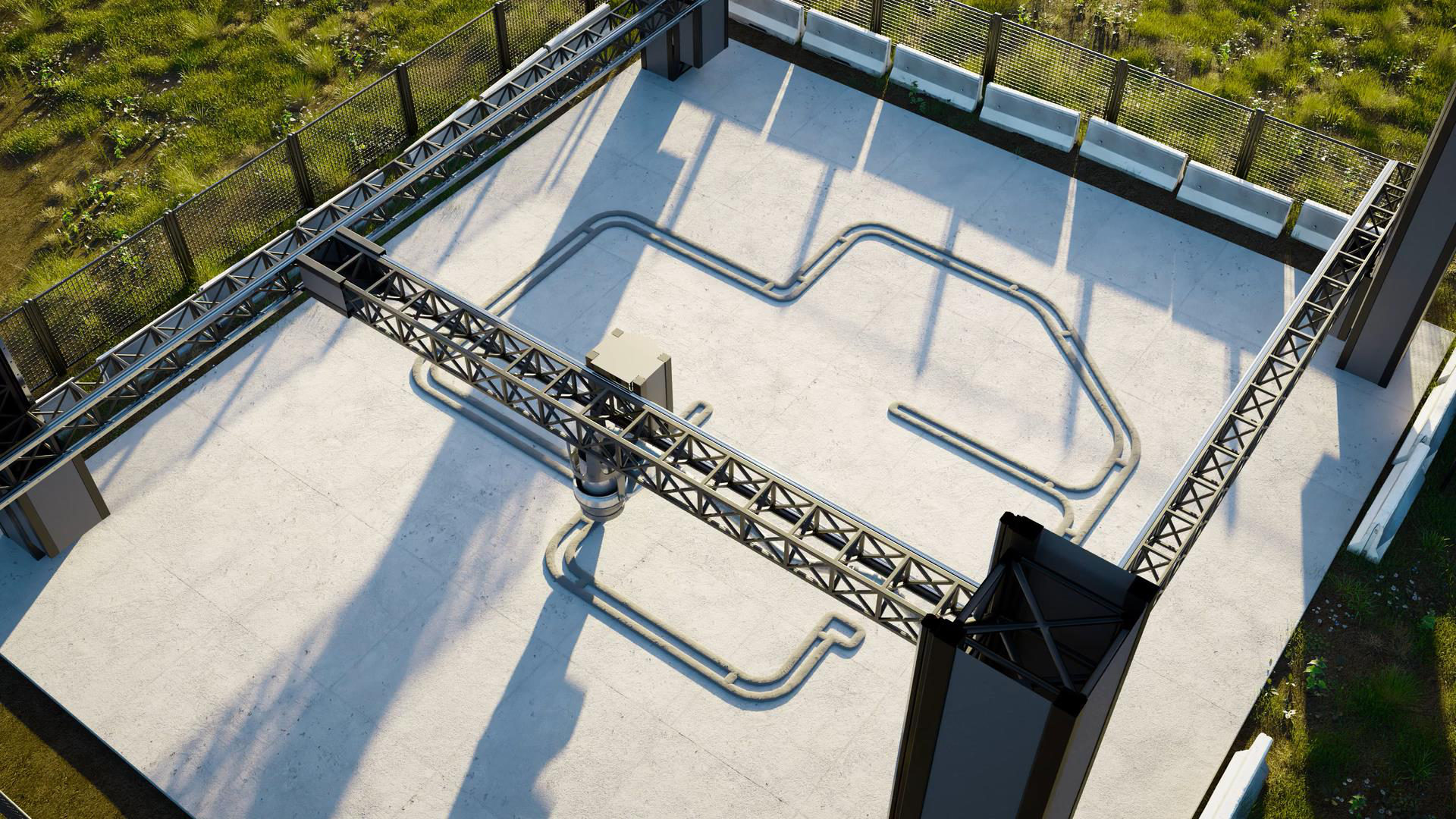
The supplied "Robot Profit Club" deck isn't a product brochure. It invites the public to "participate" in fractional ownership of robots, with fixed-term plans, a token presale and a referral structure. Our technical conclusions in §2–§6 hold regardless of this programme. However, the programme as presented carries severe legal, financial and reputational risk, and should not be used to market the technology.
| Feature in the deck | Why it's a concern |
|---|---|
| "100% profit in 9 months"; ~12.1%/month (Fixed) or ~6.04%/month (Flexible) | That's ~145% or ~72% a year, far above any established asset-leasing return. High, steady, pre-stated returns are the most common warning sign regulators highlight. |
| "Your profit is added daily" to an online dashboard | Daily accrual implies smooth income, but rental income is lumpy (jobs, mobilisation, gaps). Smooth payouts that don't match underlying cash flow are a classic warning sign. |
| Robots "available now and in pipeline, ready to be manufactured" | If participants are credited returns before their robot exists or is rented, those returns can only come from other participants' money or from company reserves. |
| "Asset Back Guarantee" protecting the initial amount | No guarantor, insurer, security trustee or legal charge is named. An unbacked guarantee is only a promise. |
| "Profits are not guaranteed…" next to "100% profit in 9 months" | The fine print contradicts the headline. Under UK rules, promotions must be fair, clear and not misleading as a whole. |
| "Contact the person who shared this", "Become a Brand Ambassador" | Recruitment-led distribution through personal networks is associated with pyramid-style schemes. |
| Token presale (RPC Coin), "Stage 1, members only", free token vouchers | Bundling a cryptoasset with an investment adds a separate regulated area (UK cryptoasset promotion rules) and further inducement risk. |
| "Public access available only until venture capital entry" | Artificial urgency. Professional investors would normally come before retail, not after. |
| NASDAQ IPO by May 2028 | Not achievable on the stated timeline without audited operating history. It is used here to suggest future liquidity. |
| "$200,000" robot in the deck vs £250,000 list price on buildatronix3d.com | Investors are told one asset value while customers are quoted another (about $330k at current rates). Which figure backs each investor's "fractional ownership" is unclear. |
| "Guaranteed 50% annual return" (superbmodular.com Co-ownership) | An explicit guarantee of a very high return on a retail investment from £1,000. Regulators treat promises like this as a key warning sign. The figure also conflicts with the deck's own disclaimer that "profits are not guaranteed". |
UK legal position (summary, not legal advice). Pooled, promoter-managed fractional interests in income-producing assets are likely to be a collective investment scheme under FSMA s235. Communicating an invitation to invest in the UK is a restricted financial promotion under FSMA s21 unless it is made or approved by an FCA-authorised firm. Since 2023, investments in unregulated pooled schemes generally can't be mass-marketed to retail investors at all. Breaching s21 is a criminal offence, and agreements made in breach may be unenforceable against investors. Everyone who shares the material (the "person who shared this") may also be communicating a promotion.
Recommended actions
- Stop circulating the Robot Profit Club deck, videos ending in "contact the person who shared this", and brochure page 45 ("Fractional Ownership Program"), pending legal review.
- Take down the superbmodular.com Co-ownership page and the buildatronix3d.com Investors page, or replace them with a holding notice, until an FCA-authorised firm has approved any replacement.
- Check the FCA Register and Warning List for every entity involved before any money changes hands. Our searches found no FCA authorisation or warning-list entry for "Robot Profit Club" or "Buildatronix", which means neither was confirmed.
- If capital is needed, use authorised routes: an FCA-authorised crowdfunding platform, SEIS/EIS equity rounds with proper disclosure, or asset finance on robots backed by real rental contracts.
- Anyone who has already paid in should ask for audited accounts, robot serial numbers and rental contracts linked to their share, and take independent advice.
What could go wrong, and what we do about it.
| Risk | Likelihood | Impact | Mitigation |
|---|---|---|---|
| Investment programme triggers regulatory action, damaging the product brands | High | High | Separate the programme from the product brands now. Get legal review and use authorised capital routes (§7). |
| No structural warranty or BOPAS for 3DCP homes, so they can't be mortgaged | Medium | High | Engage warranty providers in Phase A. Target hospitality and rental first, where mortgages aren't needed. |
| PU-core panels fail the fire strategy for the intended use | Medium | High | Get classification reports and a fire-engineer review. Offer a mineral-wool or non-combustible core option. |
| Imported units arrive with non-UK electrical fittings or defects | Medium | Medium | Pre-shipment inspection, UK spec sheet in contract, and BS 7671 certification on arrival. |
| Robot print data underperforms claims (speed, strength, tolerance) | Medium | High | Gate C is a witnessed test with independent lab results before any sales claims are made. |
| Low robot utilisation from mobilisation, weather and site readiness | High | Medium | Pipeline-based scheduling, regional crews, and pricing per m² rather than per day. |
| Planning refusals for pods outside the caravan definition | Medium | Medium | Get a planning opinion per model and choose pilot sites with consent. |
| Transport damage to glazed capsule units | Medium | Medium | Lifting plan, crating spec, and transit insurance. |
| Marketing claims judged misleading (ASA / CAP code) | Medium | Medium | Use only evidence-graded claims (§3), label renders as illustrative, and qualify print times. |
| Customer funds at risk from the 75% advance-payment terms | Medium | High | Staged payments, escrow, or a bank guarantee or letter of credit. Get title to the unit at payment. |
| Hidden OEM supplier (watermarked gallery images) creates warranty and IP gaps | Medium | Medium | Name the factory, flow its warranties down to customers, and license or replace the images. |
| Website errors (placeholder contacts, spec conflicts) erode trust | High | Medium | Fix the items in the §3.1 audit before any campaign. One source of truth for specs. |
| Renders mistaken for delivered products | Medium | Low | Photograph the pilot units and replace renders progressively. |
From proof to scale.
| When | Milestone | Gate to pass |
|---|---|---|
| Q4 2026 | PoC kick-off: document audit, sample unit ordered, legal review of the capital programme | Gate A: claims evidenced or withdrawn |
| Q1 2027 | Sample unit tested; first witnessed UK demo print; first show home installed | Gates B & C |
| Q2 2027 | Warranty and assurance route agreed; first signed hospitality orders | Gate D, plus warranty provider acceptance in principle |
| H2 2027 | First commercial sites delivered; first 3DCP dwellings under building control | Completion certificates; customer references |
| 2028+ | Regional print crews, standard printed house types, export markets | Two years of audited trading before any public listing ambitions |
Indicative budget for the PoC itself (excluding the cost of the sample unit): independent engineer and lab testing, a planning and fire consultant, legal review and a warranty pre-assessment. Expect this to be in the low tens of thousands of pounds. Obtain fixed quotes in Phase A.
Evidence base.
Supplied materials
- Superb Modular — Main Brochure, VGov V10 (46 pp.)
- Robot Profit Club — Short NOAP 0926 V26 (12 pp.)
- Buildatronix 3D promotional videos, 19 Sep 2026 (43 s and 37 s)
- buildatronix3d.com: 3DCP Robots, About, Investors, Contact (read 26 Oct 2026)
- superbmodular.com: Capsule Collection, A-Frame Series, Round Villa, Office Pods, Ordering Process, Land Owners, Commercial, Co-ownership (read 26 Oct 2026)
Public sources (vendor-reported figures are flagged as such in the text)
- COBOD — How it works (print-time guidance)
- COBOD — 30% faster and 10% more cost-effective (PERI assessment)
- Fabbaloo — COBOD real-world cost and time savings
- Human Progress — ICON wall-cost reduction report
- Portugal's first 3D-printed home (Havelar), walls in 18 hours
- COBOD — BOD2 specifications · Aniwaa — BOD2 pricing note · Fabbaloo — BOD2 price range (2019)
- Silicon Republic — UK's first 3D-printed homes scheme (Accrington)
- Homebuilding & Renovating — 3D printed houses in the UK
- Concrete Connect — Is 3DCP the future of housebuilding?
- Pinsent Masons — FCA rules for high-risk investment promotions
- Orrick — FCA restrictions on high-risk financial promotions
- FCA ScamSmart · FCA Financial Services Register
This document is a technical and commercial assessment prepared from the supplied materials and public sources. It is not legal, financial or investment advice. Regulatory summaries are simplified, so take professional advice before acting.